
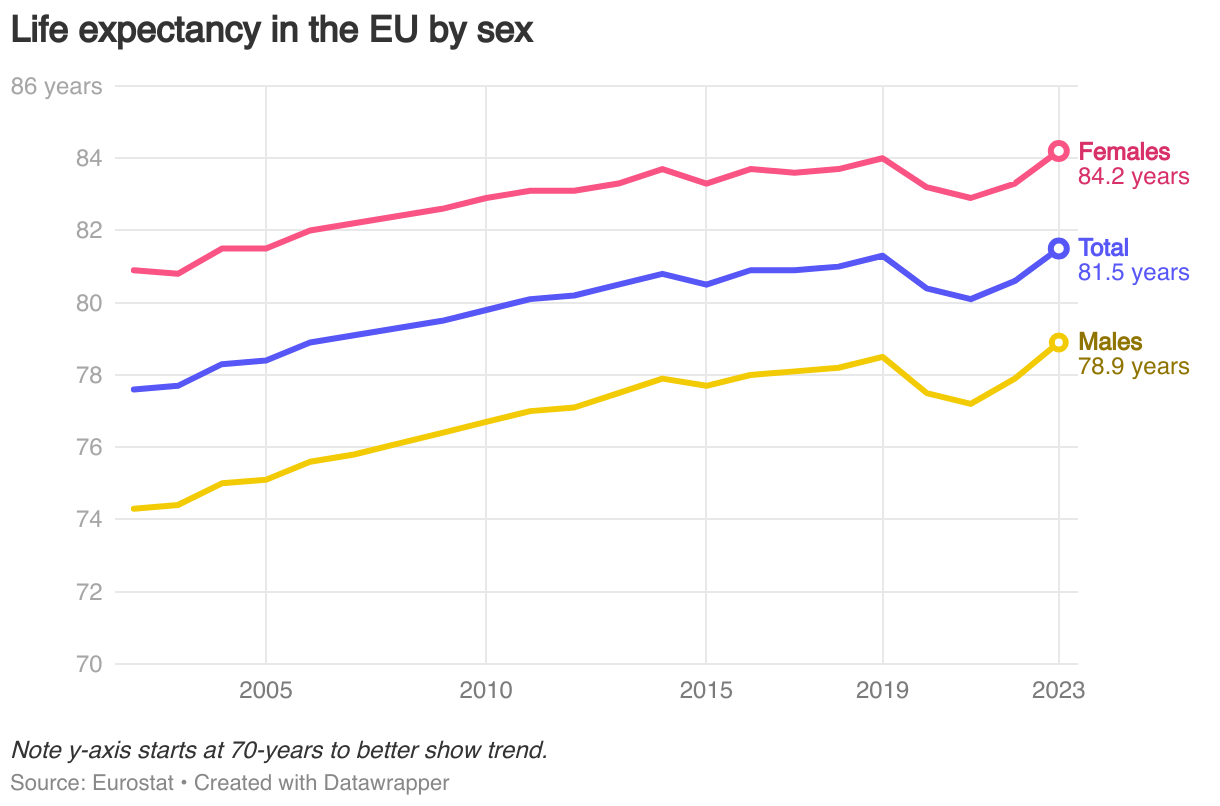
Life expectancy is defined as the average number of years a newborn child would live given current mortality rates. Life expectancy in the EU reached an average of 81.7 years in 2024, according to the latest provisional estimates from Eurostat. Thus, a newborn EU citizen in 2024 is expected to live well into the 22nd century, given current mortality conditions.
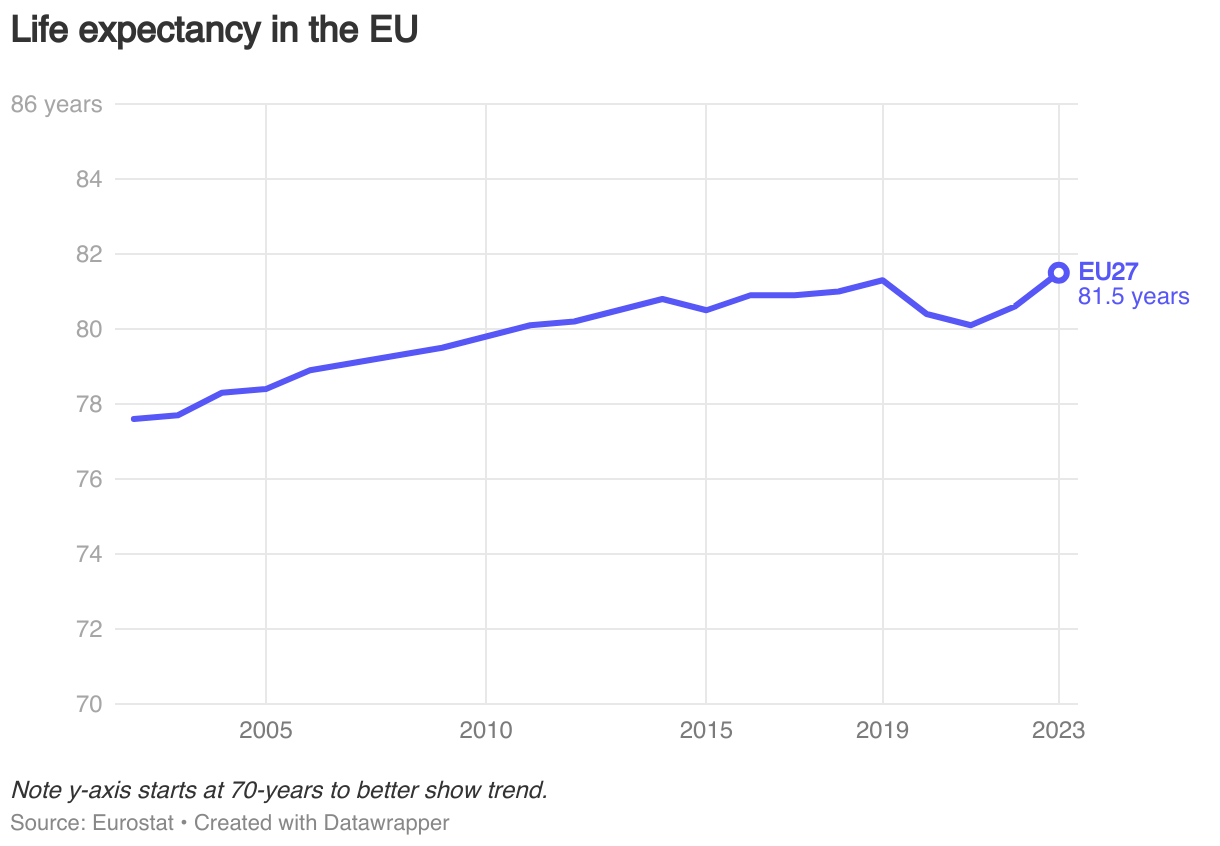
During 2020 and 2021 life expectancy fell due to increased mortality caused by the COVID-19 pandemic. From 81.3 in 2019, it fell to 80.4 in 2020 and further to 80.1 in 2021. Since 2022 it has risen each year and the level reached in 2024 is 0.4 years higher than in 2019.
Life expectancy by country
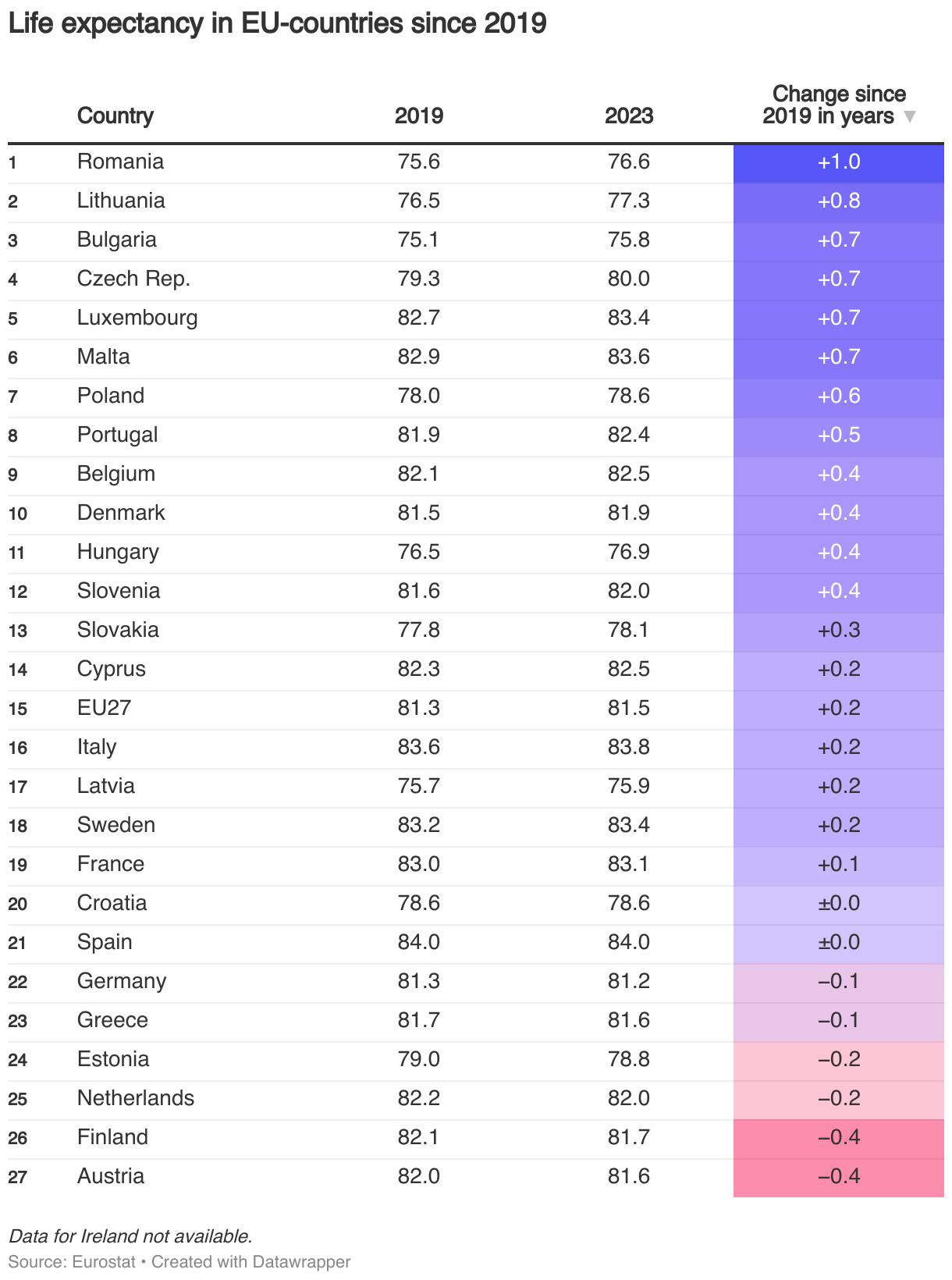
Italy and Sweden and had the highest life expectancy out of all the EU27 countries in 2024, according to Eurostat estimates. Standing at 84.1 years, this is over 8 years longer than Bulgaria, which has the lowest life expectancy at 75.9 years. Out of 26 countries with data, 18 have a life expectancy of above 80 years.
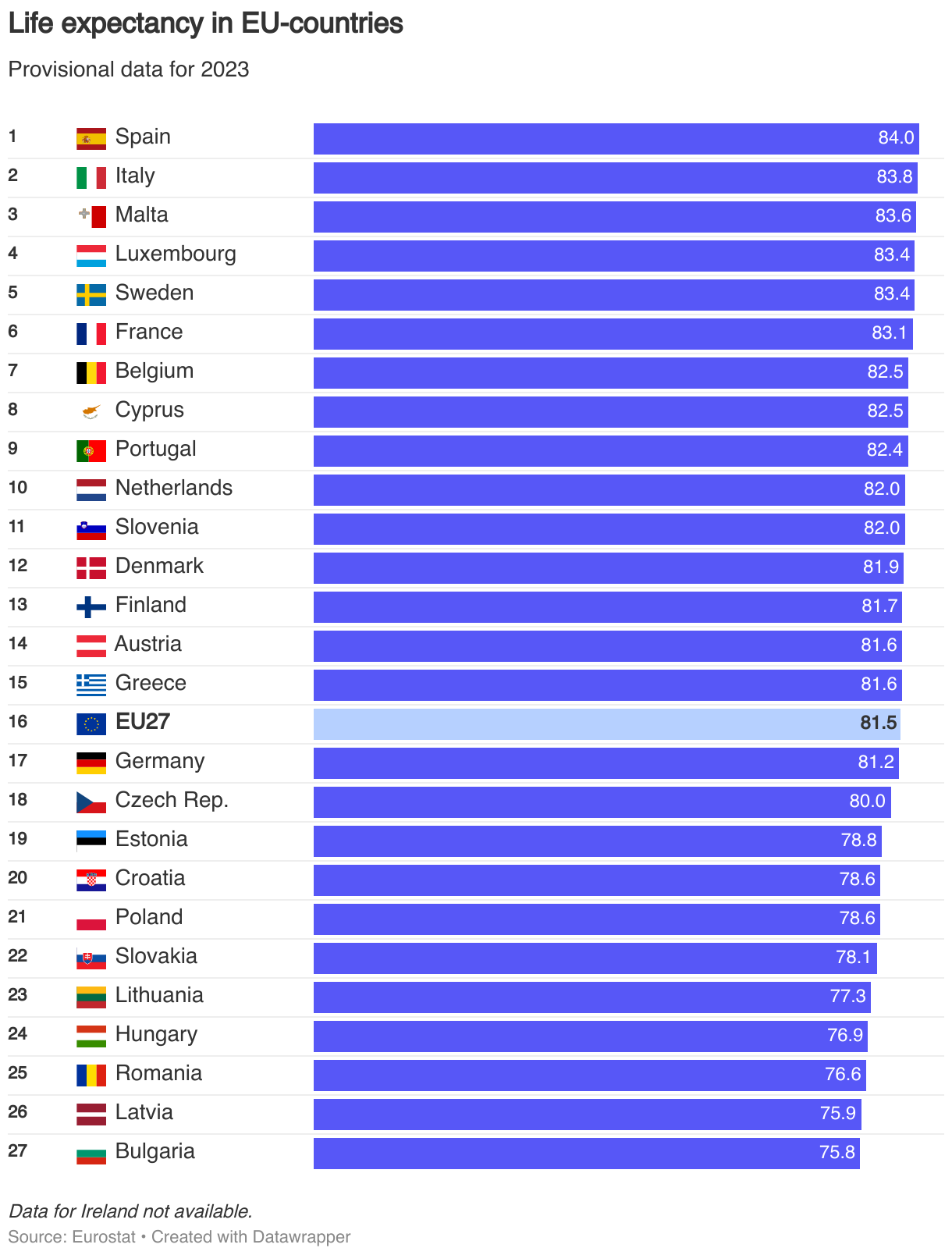
Since 2002, the first year for which data for all EU countries is available, Estonia has had the largest increase in life expectancy of 8.2 years. The smallest increase was in Greece, where life expectancy increased by 2.7 years.
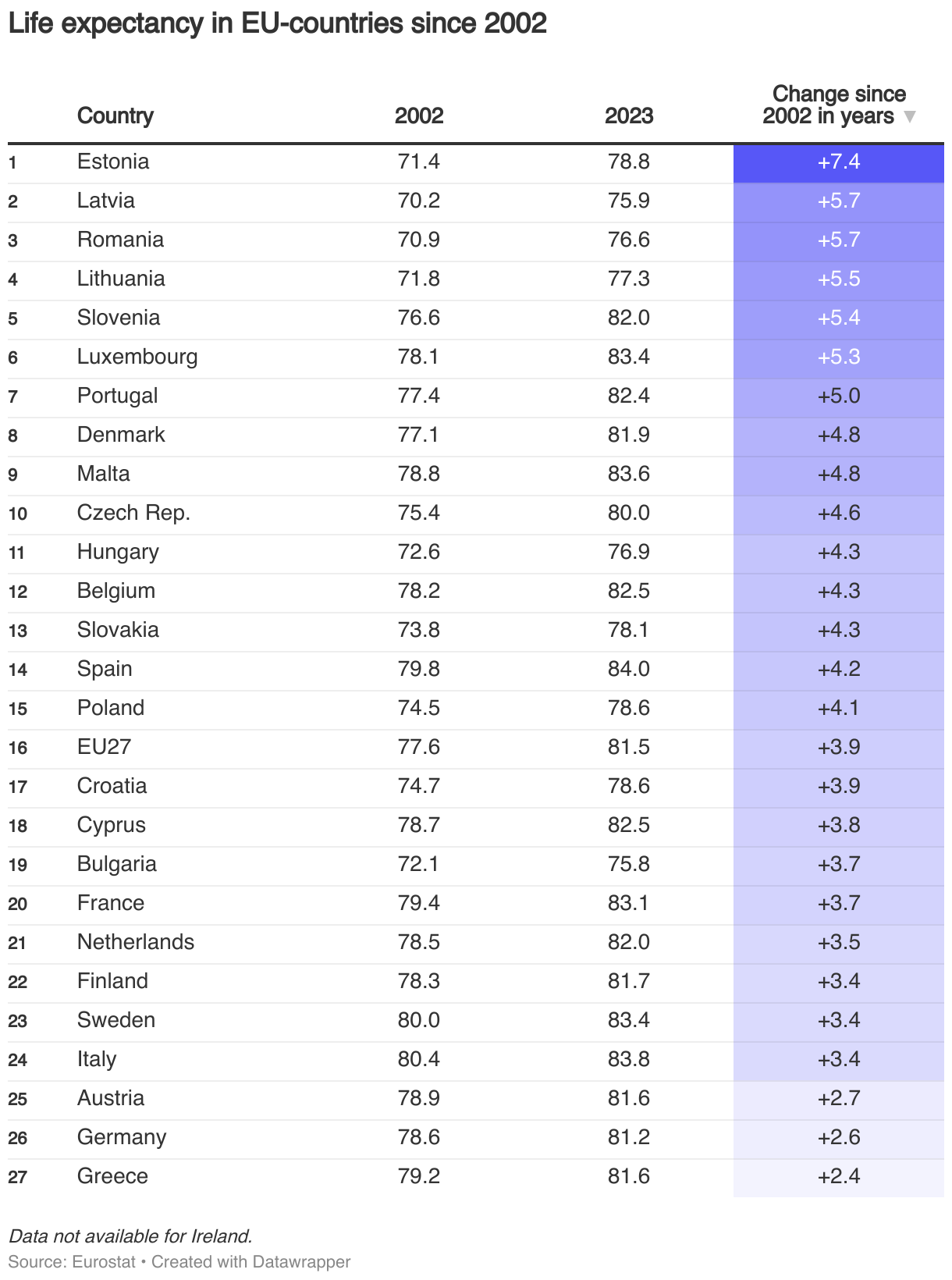
Compared to 2019, six of 27 EU countries are still seeing lower life expectancy levels in 2023. Romania is the country with the largest increase since 2019.
Life expectancy by sex
Females have a higher life expectancy than males. In 2024, on average in the EU27 countries, a newborn female could be expected to live 5.2 years longer than a newborn male. Both females and males are seeing higher life expectancy in 2024 than in 2019.
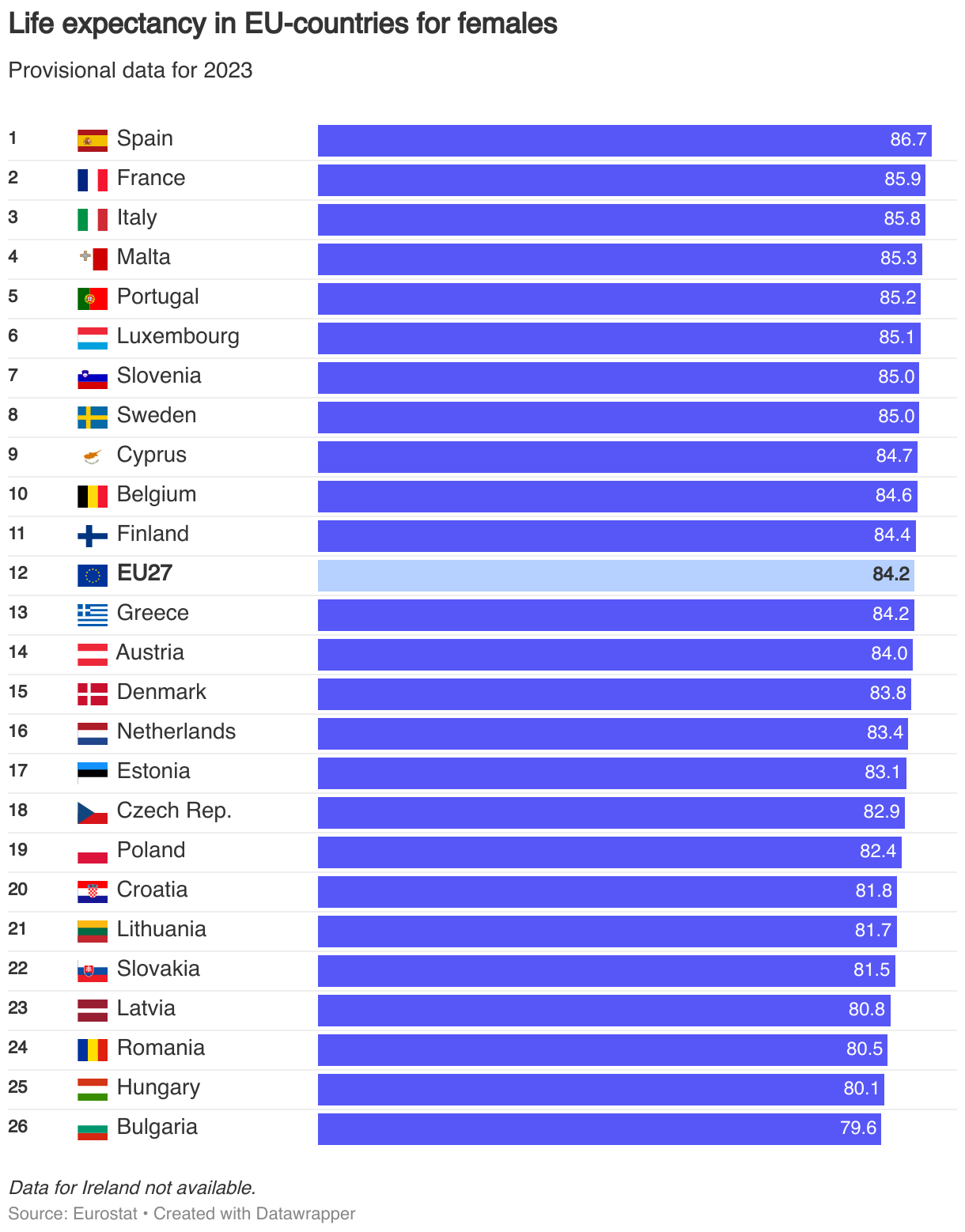
For females, life expectancy in 2024 was highest in Spain (86.6) followed by Italy (86.0), France and Luxembourg (85.9). It was lowest in Bulgaria (79.7) followed by Hungary (80.1) and Romania (80.4).
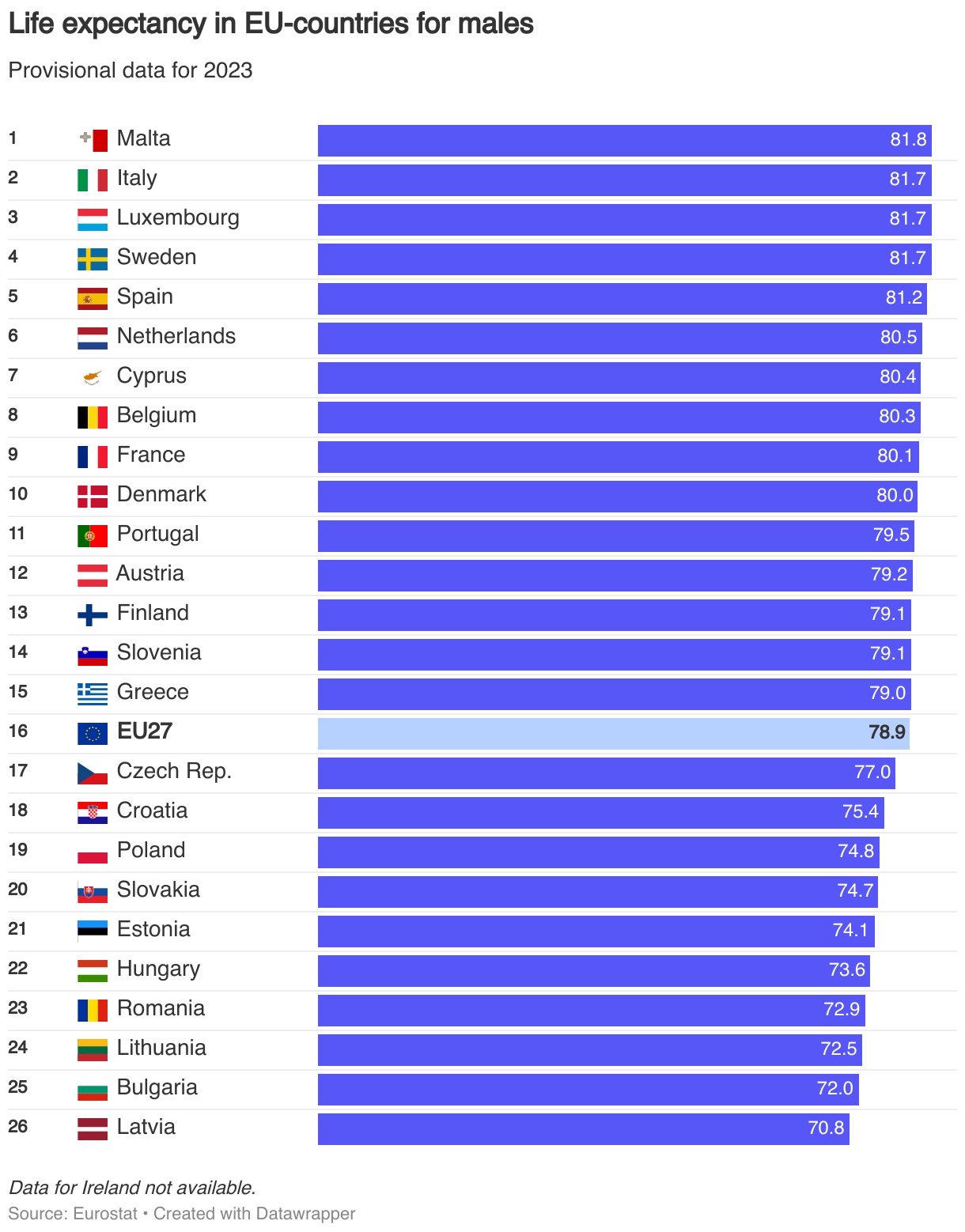
For males, life expectancy in 2024 was highest in Sweden (82.6) followed by Italy (82.0) and Malta (81.6). It was lowest in Latvia (71.6), Bulgaria (72.3) and Romania (72.8).
Read more:
- Eurostat, Life expectancy by age and sex.